.png)
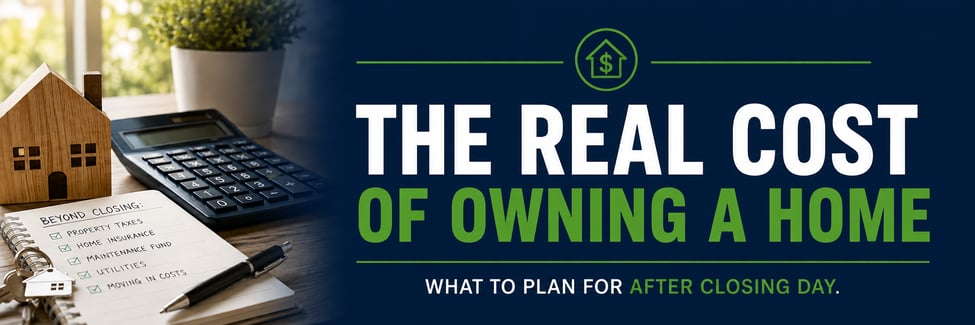
You Budgeted for Closing Day. Nobody Budgeted for What Comes After.
The real costs of owning a home in Manitoba show up after you move in — not on your closing statement — and here’s what to actually plan for.
Most Manitoba buyers brace themselves for one number: closing day. Land transfer tax, legal fees, the down payment — you budget for it, you clear it, and you assume the hard financial part is over. It isn’t. The real cost of owning a home in Manitoba shows up in the months after you move in, not on your closing statement — and it’s usually the gap between what buyers expect to spend and what they actually spend that catches people off guard, not any single cost on its own.
I walk buyers through closing costs before every offer — what to expect on possession day is covered in detail here: closing costs in Winnipeg. However closing day isn’t the finish line. Here’s what actually shows up in year one.
Read the Full Video Transcript
0:00 — Closing day feels like the finish line. Land transfer tax, legal fees, the down payment — all budgeted, paid, and cleared. The hard financial part is over. Well, not quite. Someone closes on a home, breathes a sigh of relief, and then gets caught off guard three or four months later — not by one big cost, but by a handful of smaller ones nobody walked them through ahead of time. This video isn’t about closing costs — that’s a separate conversation, and there’s a blog linked in the description below if that’s more of what you need. I’m Justin Zinkowski with Royal LePage Prime Real Estate. I work with buyers and sellers across the Winnipeg and Interlake region. This video is about what shows up after the moving truck leaves — the real cost of owning a home in Manitoba.
0:44 — Starting with property tax — this one trips up most new homeowners. Buying a home doesn’t automatically trigger a new tax bill based on purchase price. Winnipeg usually reassesses every property citywide on a two-year cycle, not house by house the moment homeownership changes hands. So if a buyer paid more than the home’s previous assessed value, the tax bill doesn’t jump to match it overnight — the first bill is usually based on the previous owner’s assessment, because assessment and purchase price are two completely different numbers, set on two completely different schedules. That gap does eventually close as citywide reassessments catch up, but it’s not tied to a closing date. Taxes in Winnipeg are usually due by June 30th each year. If the number on a future notice looks off once reassessment catches up, there’s an appeal process through the city — worth knowing that option exists before assuming the number on the page is final.
1:42 — Next is insurance. This one catches renters turned buyers the hardest, because renter’s insurance and homeowner insurance aren’t in the same universe cost-wise. Home insurance in Manitoba averages around $1,100 a year — in Winnipeg specifically, that number can run closer to $1,400 to $1,500. That’s not a number most first-time buyers have priced into their monthly budget, and suddenly it’s one more item competing with moving costs. Renter’s insurance is cheap because it only covers what’s inside the unit. Homeowner insurance covers the structure itself — the age of the roof, the condition of the basement, the flood risk — and premiums vary widely depending on the specific home.
2:22 — And now, the one almost nobody ever budgets for: ongoing maintenance. A common guideline is to set aside 1 to 1.5% of a home’s value each year for maintenance and repairs. On a $400,000 home, that works out to roughly $4,000 to $6,000 a year, whether it actually gets spent that year or not. None of this is a reason to wait on buying — it’s a reason to open the maintenance fund on closing day, so year three’s roof or furnace replacement is an item that was already planned for, instead of an emergency that wrecks a budget. If this is the stage that’s actually on your mind right now — trying to get a full financial picture before writing an offer — there’s a First-Time Buyer Guide linked in the description below. Might be worth grabbing now for the next step.
3:13 — Utility costs jump more than buyers expect. Heating an entire house through a Manitoba winter costs meaningfully more than heating the one or two rooms most renters were ever responsible for — and that’s before water, sewer, and garbage charges, the kind of thing that was probably bundled into rent before and never itemized on its own. Most buyers can estimate their mortgage amount down to the dollar before they ever make an offer. Most buyers do ask what utility costs run — very few ask for a full year of bills before deciding what they can actually afford, and one summer month says nothing about what a Manitoba winter might actually cost to heat. It’s a reasonable thing to ask for, especially heading into a first Winnipeg winter as an owner instead of a renter.
4:01 — Then there’s moving in itself, plus the smaller things nobody thinks about until the exact moment they need them — window coverings, appliances, changing the locks. All of that typically adds another $500 to $2,000 in the first few weeks alone.
4:16 — Homeownership is still one of the best financial decisions most people make in Manitoba. However this conversation belongs before an offer gets written. Before helping anyone make a decision this size, understanding the full picture matters — not just the mortgage payment, but what the next 12 months actually look like financially. That’s what makes buying a home feel like a decision someone made on purpose, instead of something that just happened to them. If this is where you’re at in your own search in Winnipeg or the Interlake, the First-Time Buyer Guide is linked below, and a call is a good option to talk through the actual numbers for your situation. Subscribe for more of this — real costs, real numbers.
Property Taxes Don’t Reset the Moment You Buy
Buying a home doesn’t automatically trigger a new property tax bill based on your purchase price — Winnipeg reassesses all properties on a citywide two-year cycle, not one house at a time when it sells.
A lot of new owners assume their tax bill will immediately reflect what they paid, especially if they bought above the home’s previous assessed value. That’s not how it works. Assessment and purchase price are two different numbers, and the City of Winnipeg’s Assessment and Taxation Department revalues the entire city together on its own schedule, not per transaction. Your first tax bill is usually still based on the seller’s old assessment — that gap does close over time as reassessments catch up, however it’s not overnight, and it’s not tied to your closing date.
Property taxes in Winnipeg are due by June 30 each year. If you have concerns about your assessed value once it does catch up, you can appeal through the city’s Board of Revision — worth knowing that option exists before you assume the number on the notice is final.
Home Insurance Costs More Than Most Renters Expect
Home insurance in Manitoba averages roughly $1,144 a year province-wide, and Winnipeg runs higher — closer to $1,473 a year. That’s real money most first-time buyers haven’t priced into their monthly budget until their lender asks for proof of coverage a few weeks before closing.
Renters’ insurance is cheap because it only covers contents. Homeowners insurance covers the structure itself, and premiums vary widely based on the specific house — age, roof condition, whether the basement is finished, flood zone — not the neighborhood. Two similar-looking homes two doors apart can get quotes that differ by hundreds of dollars. Get a quote while you’re still deciding on a home, not after your offer’s already accepted — it shouldn’t be a surprise during financing.
The Maintenance Budget Nobody Tells You to Start
A common budgeting guideline is to set aside roughly 1 to 1.5 percent of your home’s value every year for maintenance and repairs — on a $400,000 Winnipeg home, that’s $4,000 to $6,000 a year, whether you spend it or not.
As a renter, when the furnace stops working, you call a landlord. As an owner — especially in a lot of Winnipeg’s older housing stock — that call stops with you. This isn’t about scaring anyone out of buying. It’s about building the habit of setting money aside starting in month one, even when nothing’s broken yet, so year three’s furnace or roof replacement is a line item instead of an emergency.
👉 Playbook: First-Time Buyer Guide
If this is the stage you’re at, the full guide walks through financing, closing costs, and what actually happens on possession day.
Utility Costs Jump More Than Most Buyers Expect
Heating an entire house through a Manitoba winter costs meaningfully more than heating the one or two rooms most renters are responsible for — and that’s before water, sewer, and garbage charges that were often bundled into rent and never itemized for you.
This is one of the quieter surprises in year one. Most buyers can estimate their mortgage payment down to the dollar before they even make an offer. Most buyers do ask what utility costs run — very few ask for a full year of bills before deciding what they can actually afford, and one summer month says nothing about what a Manitoba winter might actually cost to heat.
Moving In Costs Money Too
The move itself, plus the smaller things nobody thinks about until they need them — window coverings, appliances, changing the locks — typically adds another $500 to $2,000 in the first few weeks. If you’re buying a condo, ask about the reserve fund and any pending special assessments before you close, not after — that’s a cost that can show up with almost no warning.
Why This Conversation Happens Before You Buy, Not After
This is part of the same walkthrough I give every buyer before they write an offer — see buying your first home in Winnipeg for the fuller process. None of this is meant to talk anyone out of buying a home — homeownership is still one of the better financial decisions most people make, in Winnipeg and the Interlake alike. However, I’d rather walk a buyer through these numbers before they write an offer than have them find out three months into owning a home that nobody mentioned the maintenance fund.
Before I try to help anyone make a decision this size, I want them to actually understand what they’re deciding — not just the mortgage payment, but the full picture of what the next twelve months look like financially. That’s what makes the decision to buy feel like yours, not something that happened to you.
Frequently Asked Questions
How much should I budget for home maintenance in Manitoba?
A common rule of thumb is 1 to 1.5% of your home’s value per year. On an average Winnipeg home, that works out to several thousand dollars annually, whether or not something actually breaks that year.
Does buying a home trigger a new property tax assessment in Winnipeg?
No. Winnipeg reassesses all properties citywide on a two-year cycle, not individually when a home is sold — your first tax bill is usually still based on the previous owner’s assessment.
How much is home insurance in Winnipeg?
Manitoba averages around $1,144 a year, with Winnipeg running higher at roughly $1,473 a year. Actual cost depends on the specific home’s age, condition, and location, not just the neighborhood.
What’s a realistic first-year budget beyond the mortgage payment?
Between insurance, a maintenance reserve, higher utility costs, and moving-in expenses, most Manitoba buyers should plan for several thousand dollars beyond the mortgage and closing costs in year one.
Is this the same as closing costs?
No. Closing costs — land transfer tax, legal fees, title insurance — are paid once, at possession. Closing costs in Winnipeg walks through those in full. This is about the ongoing costs that start after you move in.
👉 Guide: First-Time Buyer Guide
Everything you need to know before buying your first home in Winnipeg — from financing to closing costs to what actually happens on possession day.
👉 Breakdown: Condo Buyer Guide
Buying a condo comes with its own cost picture — reserve funds, special assessments, and monthly fees this blog only touches on. This guide walks through all of it.
👉 Roadmap: Interlake Buyer Guide
Buying a cottage or year-round home in the Interlake has its own cost considerations — this guide covers what to know before you make an offer.
👉 Related: Mortgage Pre-Approval Explained
Before any of these year-one costs matter, you need to know what you can actually afford — here’s how pre-approval works.
Have a specific situation you want to talk through? Book a call →
Looking in a specific area?
I work across Winnipeg and the Interlake. Here’s what to know about buying in your community:
Buying in the Interlake · Buying in Selkirk · Buying in Arborg · Buying in Teulon
Browse current listings: Winnipeg · Interlake · Under $400K

